
Designing Multi-Tenant SaaS Architecture: Isolation, Scalability & Trade-offs
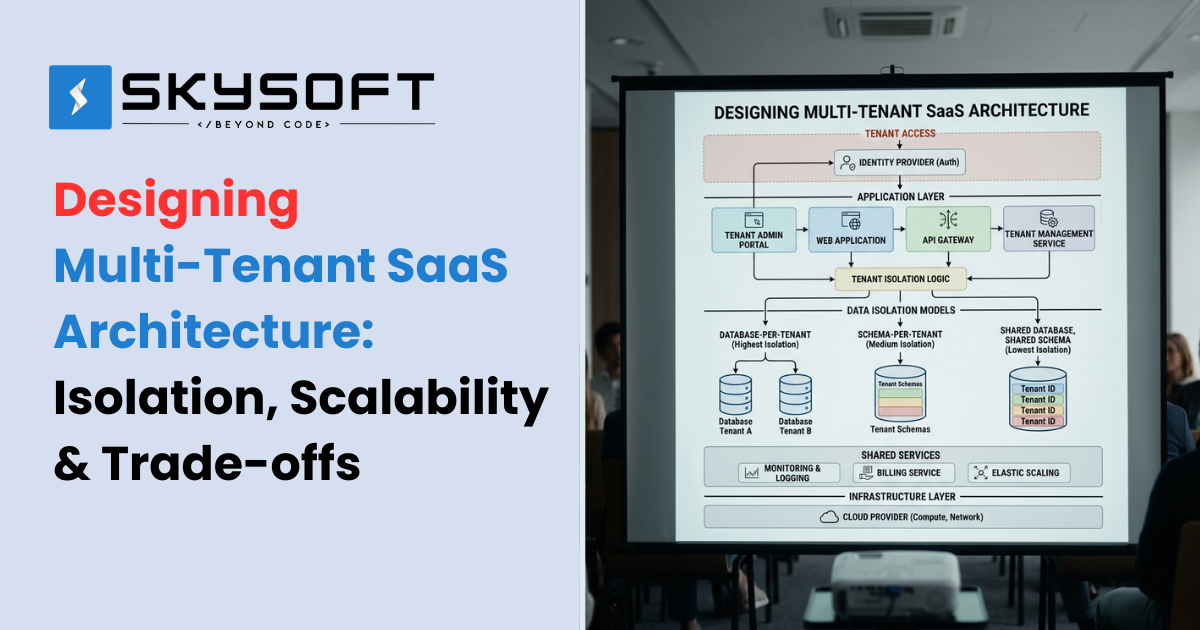
Multi-tenant architecture is the backbone of modern SaaS platforms. It allows a single application to serve multiple customers while keeping their data secure and isolated. Designing it correctly is critical for performance, cost efficiency, and long-term scalability.
What is Multi-Tenant Architecture?
In a multi-tenant system, multiple customers (tenants) share the same application and infrastructure. Each tenant’s data is logically separated, even though the underlying system is shared.
This approach reduces infrastructure costs and simplifies maintenance compared to single-tenant models where each customer has their own dedicated resources.
Types of Tenant Isolation
1. Shared Database, Shared Schema
All tenants share the same database and tables. Separation is managed via a `tenant_id` column.
- Pros: Lowest cost, easy to scale and maintain.
- Cons: Lower isolation, higher risk of data leaks if not designed properly.
2. Shared Database, Separate Schemas
Each tenant has its own schema within the same database instance.
- Pros: Better isolation, moderate cost.
- Cons: More complex management and backup procedures.
3. Separate Databases per Tenant
Each tenant has its own dedicated database.
- Pros: Highest data isolation and security.
- Cons: Higher cost and operational overhead.
Key Design Considerations
Data Isolation and Security
Ensure strict access control and tenant-level data separation. Use role-based permissions and encryption to protect sensitive data.
Scalability
The system should handle growth in both users and tenants. Use cloud infrastructure, load balancing, and horizontal scaling.
Performance Optimization
Avoid "noisy neighbor" problems where one tenant's high activity affects others. Implement resource limits and monitoring.
Customization Support
Different tenants may require different configurations. Design flexible architecture without breaking the core system.
Monitoring and Billing
Track usage per tenant for billing and performance monitoring.
Trade-offs to Consider
- Cost vs Isolation: Higher isolation (like separate databases) significantly increases infrastructure costs.
- Flexibility vs Complexity: More customization options for tenants lead to increased system complexity and maintenance effort.
- Performance vs Resource Sharing: Shared systems need careful optimization to prevent performance bottlenecks.
When to Choose Multi-Tenant Architecture
- SaaS products serving multiple customers
- Businesses aiming for cost efficiency
- Platforms requiring frequent updates and centralized management
How Skysoft Helps Build SaaS Architecture
Companies like Skysoft help design scalable multi-tenant systems, implement secure architectures, and optimize performance for growing SaaS businesses. With the right strategy and support, you can build a platform that scales seamlessly.
Final Thoughts
Multi-tenant architecture is essential for scalable SaaS products, but it requires careful design. By balancing isolation, scalability, and cost, businesses can build efficient and secure systems. With the right strategy and support from Skysoft, companies can create SaaS platforms that scale seamlessly.
Building a SaaS product?
Connect with Skysoft to explore how we can help you design and build a scalable multi-tenant architecture.