
SaaS vs Traditional Software: Which Is Better for Your Business in 2026?
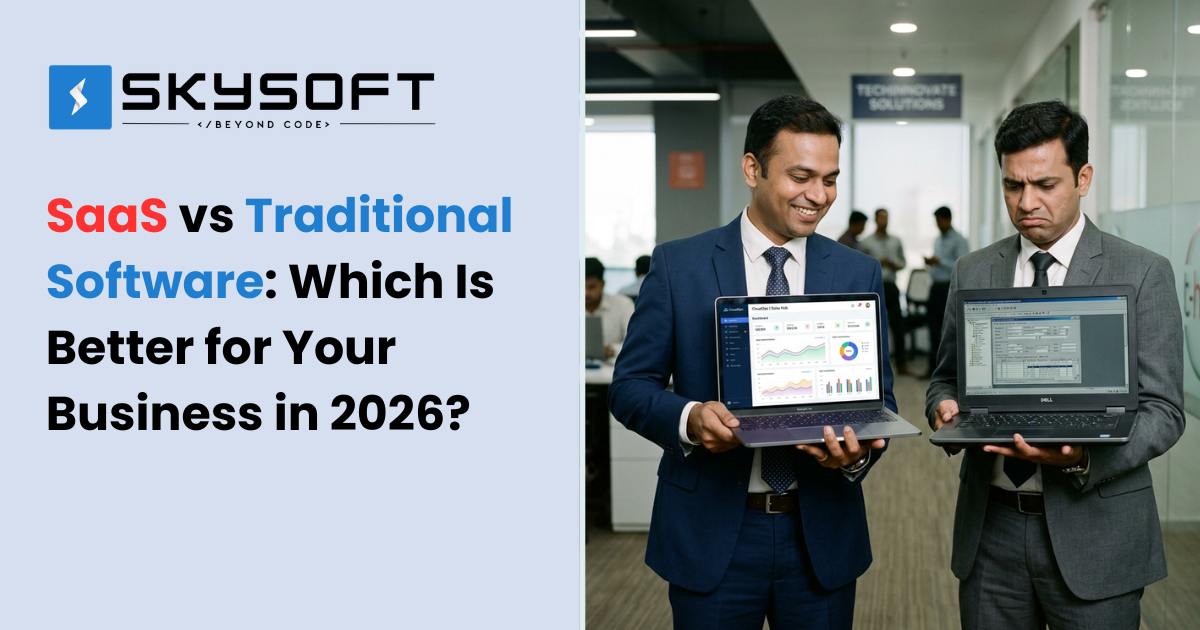
As businesses continue to digitize operations, one important decision leaders face is choosing between SaaS (Software as a Service) and traditional software. Both models serve different needs, but in 2026 many companies are shifting toward cloud-based platforms due to flexibility and scalability. Understanding the differences helps organizations choose the right technology for long-term growth.
What is SaaS Software?
SaaS refers to cloud-based applications that users access through the internet rather than installing them locally. These platforms operate on a subscription model and are maintained by the software provider.
Common examples include CRM tools, HRMS platforms, project management systems, and collaboration tools. Updates, security patches, and infrastructure are handled by the provider, reducing the need for internal IT management.
What is Traditional Software?
Traditional software, often called on-premise software, is installed directly on company servers or individual computers. Businesses typically pay a one-time licensing fee and manage their own updates, maintenance, and infrastructure.
While this model offers greater control over data and systems, it requires dedicated IT resources and higher upfront investment.
Key Differences Between SaaS and Traditional Software
1. Cost Structure
SaaS operates on subscription-based pricing, making it easier for startups and SMEs to adopt without large upfront investments. Traditional software usually requires high initial licensing and infrastructure costs.
2. Scalability
SaaS platforms can easily scale as your business grows. Adding users or features typically requires upgrading the subscription plan. Traditional systems often require additional hardware or complex upgrades.
3. Maintenance and Updates
With SaaS, the provider handles system updates, security patches, and maintenance. Traditional software requires internal IT teams to manage updates and server maintenance.
4. Accessibility
SaaS applications can be accessed from anywhere with an internet connection. Traditional software is often limited to specific devices or office networks.
5. Implementation Speed
SaaS platforms can usually be deployed quickly since no complex infrastructure setup is required. Traditional software implementation may take weeks or months.
Which Model Is Better in 2026?
For most startups, SMEs, and modern digital businesses, SaaS offers greater flexibility, lower upfront costs, and easier scalability. However, industries with strict data control requirements or legacy infrastructure may still prefer traditional on-premise systems.
How Skysoft Helps Businesses Choose the Right Technology
Companies like Skysoft help organizations evaluate their technology stack and select solutions that align with their business goals. With expert consulting and modern software solutions, businesses can adopt the right platforms to improve efficiency, scalability, and long-term digital growth.
Final Thoughts
Both SaaS and traditional software have advantages depending on business needs. The key is understanding your operational requirements, scalability goals, and technology resources. With the right strategy and guidance from Skysoft, businesses can confidently choose the model that best supports their growth in 2026.
Ready to transform your business?
Our team can help you build and integrate cloud applications for smarter, faster growth.